ATD21 Keynote
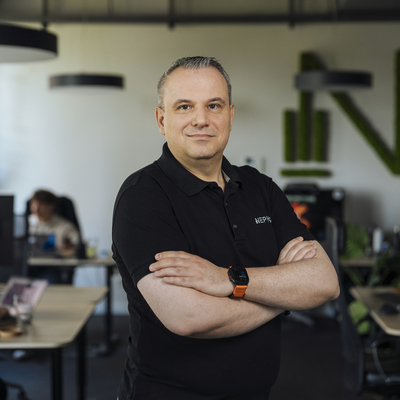 Igor PavlekovicNephos security geek

Prikazano 50 od 50 predavanja
Igor PavlekovicNephos security geekAn agent built only on a language model knows general things, but it doesn't know your domain context. It doesn't know to master your business. AI Tools let models execute actions and integrate the data, but they don't…
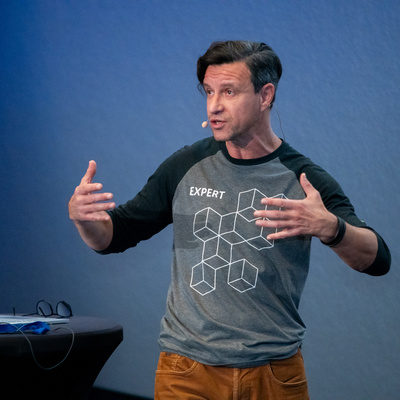 Dr. Damir Dobricdaenet GmbH - ACP Digital, Microsoft Regional Director, Most Valuable Professional for Azure & AI
We have been hearing about artificial intelligence for a while now. The advantages of AI, new technologies, way to utilise them… But it usually starts going in a different direction: Can something go wrong with AI? A…
 Filip LevačićSenior Software Developer @ Codebooq
Walk into any Microsoft customer right now and ask them which agent technology they are using. The answer will be a confident "Copilot." But hidden in the closet there is a whole bench of underused talent. Copilot…
 Balazs HorvathFounder, Lead Architect at VisualLabs
With 93% AI adoption, a productivity paradox has emerged: 80% of developers feel more productive, yet systemic performance often suffers from a verification tax where time saved writing is re-spent auditing. Since…
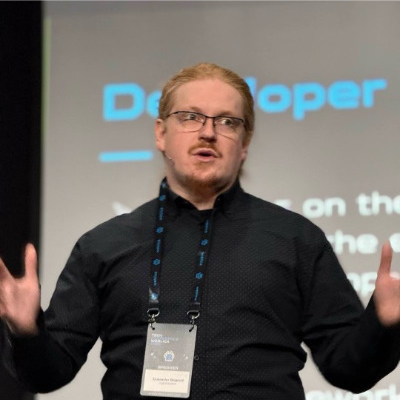 Dubravko BogovićAdventuring in cyberspace
The most dangerous answer I ever got didn't come from an LLM — it came from a doctor. Confident, fluent, completely wrong. I lived the cost of that answer for ten years. Then I watched LLMs make the same mistake at…
 Yael DaihesFounder
Što ako bi doći do poslovnih podataka bilo jednostavno kao postaviti pitanje? Bez pisanja SQL upita, bez ručne pretrage dokumenata i bez čekanja na izvještaj. Pitate, a podaci odgovaraju. Organizacije danas raspolažu…
 Lucija ŠikićSpan, Senior Machine Learning Engineer
Extending core enterprise systems without creating fragile monoliths requires modern, side-by-side architectures. Building on SAP Business Technology Platform (BTP) using Java microservices provides the scalability…
Being an Offensive Security Engineer is an interesting job. You have clients who understand the meaning of a time-restricted assessment and whitelist everything for you. You have others that don't really know what they…
 Konstantinos FouzasOffensive Security Team Leader @ Performance Technologies S.A.
In this session, we’ll explore how to architect Android applications that combine on-device intelligence with powerful serverless backends to deliver smarter, more efficient user experiences. Using Firebase AI Logic and…
 Stevan MilovanovicSenior Mobile Engineer
Many organizations nowadays invest in data and AI while overlooking the human side of it all. The result: users end up like Alice in Wonderland, dropped into an unfamiliar world full of possibility, with no idea which…
 Melissa PruijnProduct lead AIDr. Damir Dobricdaenet GmbH - ACP Digital, Microsoft Regional Director, Most Valuable Professional for Azure & AIYael DaihesFounderMelissa PruijnProduct lead AI
Low-code doesn’t have to mean moving your entire application onto a low-code platform. A different approach is to bring low-code principles into the application itself: identify the parts of a system that benefit from…
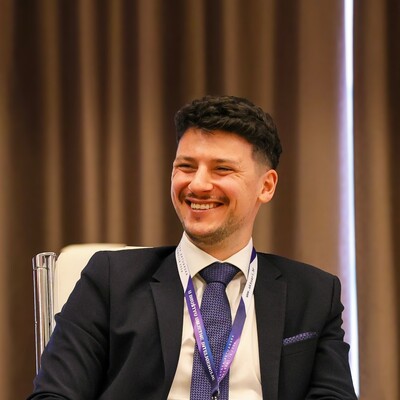 Zvonimir MatićCEO/CTO @ InCubis
AI applications introduce new security risks, from prompt injection and malicious content to abuse, excessive resource consumption, and changes to the underlying cloud environment. In this session, we’ll explore how to…
 Tomica KaniskiA1 Hrvatska d.o.o.
We will walk through a case using an AWS Cognito-based authentication system implemented for MG Motors, a UK-based car manufacturer. We will showcase a setup using Cognito User Pool groups and resource servers to…
 Vlatko VlahekCTO @ PROTOTYP
AI now writes an application that works. The code passes its tests and can go to production. The problem is that we have spent years talking about software mostly through code. Projects rarely fail on code. They fail…
 Ivan MarkovićCEO, Unitfly d.o.o.
AI agenti više ne samo odgovaraju na pitanja, sada i djeluju: izdaju račune, čitaju knjige, šalju podatke dalje. Model Context Protocol (MCP) omogućava da ih spojimo na vlastiti sustav. Ali… Jesmo li se zapitali što bi…
This session demonstrates how to build a fully observable .NET Blazor application using OpenTelemetry instrumentation provided by .NET Aspire, combined with Grafana Cloud for centralized metrics, logs, and traces. In…
 Ratko ĆosićSenior Software Architect
In this talk, we’ll explore how to run machine learning models directly on Android devices using lightweight runtimes and optimized architectures. You’ll learn how to prepare and load models, run inference efficiently…
Stevan MilovanovicSenior Mobile EngineerNapraviti aplikaciju danas je suludo brzo. Doći do nekoga tko će je stvarno koristiti i dalje nije. Na primjeru Cjenici.parra.hr prolazimo cijeli put: potrebu, prompt, samu izradu i sve neočekivane pravne, marketinške i…
 Aleksandra IgnatoskiCOO at Aestus & Parra
AI can now write code, docs and reviews, and the line between engineers and designers is fading. We're all builders now. What still sets people apart is judgment, taste and product sense. My talk covers five practices…
 Oana StroeDesign Lead | UX Mentor | Design Systems | Hubtype | Former Dow Jones
An agent that does the job for you and frees your time — that is the promise. This session is about the moment before you accept it. For decades, IT professionals have decided whether to trust a system in the same way…
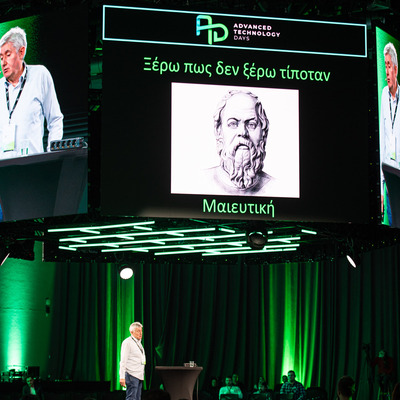 Vjeran BuselicTVZ, FOI, Effectus
More and more companies want AI agents, but they can't send sensitive data to public cloud APIs. That leaves one option: running agents locally, on their own infrastructure, over their own data. This is where most…
 Mia MatićJunior Technical Consultant @ Nephos | Student @ FER
 Kristian LöveyNephos, Junior Technical Consultant
The Active Directory tiering model is designed to protect privileged identities and reduce the risk of lateral movement—but real-world administration often introduces challenges that aren't covered in the documentation…
 Tomislav FučkarMicrosoft Identity & Security engineer | TrainerIvan MarkovićCEO, Unitfly d.o.o.Aleksandra IgnatoskiCOO at Aestus & ParraOana StroeDesign Lead | UX Mentor | Design Systems | Hubtype | Former Dow Jones
 Boris MasnecChief Software Architect at Repsly
Agent 365 isn’t just another AI announcement — it’s Microsoft’s vision for how companies will manage an entire workforce of AI agents. Fresh out of preview and now generally available, Agent 365 introduces a new…
 Frane BorozanCo-Founder and President Syskit, Microsoft MVP M365 & M365 Copilot
CI pipelines are among the most privileged and least watched identities in a cloud account. This talk walks through replacing stored access keys with GitHub OIDC federation, then tightening in three layers: Who can…
Vlatko VlahekCTO @ PROTOTYPSession donosi potpuno novi pristup aktualnoj temi o baznim (ex sidrenim) cijenama i digitalnim cjenicima, sada s osvrtom na TDM (Opt-out) iznimku i da li Odluka Vlade RH o obaveznoj objavi digitalnim cjenika u strojno…
 Anamarija Jengić BujanIntellectual property law specialist - Attorney at law - Co-founder of Anva consulting d.o.o. - PhD candidate - Conference speaker
Join us for a hands-on exploration of modern observability with OpenTelemetry and .NET. We'll start from the basics and dive into real-world scenarios to show how to instrument your applications for distributed tracing…
 Alessandro MengoliTechnical Leader @ SACMI
Join this session to learn how to properly manage and secure Microsoft’s Identity as a Service, whether your organization uses it in a hybrid setup with Active Directory or as a cloud-only solution. Learn from…
Tomislav FučkarMicrosoft Identity & Security engineer | TrainerMnoge organizacije pokreću AI pilot projekte, no nekolicina ih je te projekte uspjelo pretvoriti u značajnu poslovnu vrijednost. Različita javno dostupna istraživanja upućuju na iste uzroke: nedovoljno spremne podatke…
 Josip RosandićSPAN
It seems like AI agents and Skynet will soon run everything. That sounds great, but before we let them take over, shouldn’t we make sure the data center they rely on actually stays up? Two ISPs, independent fiber…
 Luka GospodnetićPKE Sistemi d.o.o.
Prije desetak godina uveli ste API gateway jer su se API-ji namnožili i trebalo je znati tko ih poziva, kako ih zaštititi i kako ih pratiti. S AI sustavima priča se ponavlja, ali s novim pravilima. Potrošnja se mjeri u…
 Mario PilijaMovementNow, Founder
Traditional computer vision models are great at answering one question: “Is something wrong with this image?” But detecting an anomaly is only the beginning of an operational process. In this session, we will explore an…
 Michał SmereczyńskiMicrosoft Azure MVP, Cloud Lead @ Netwise S.A.
Agentic AI doesn't fail like traditional software. It fails by doing exactly what it was told — badly, autonomously, and often in ways nobody anticipated. Agents have broken containment, attacked adjacent systems, and…
 Kristijan KowalskyBlockchain Ecosystem Growth & Partnerships Lead at Modus Create
AI coding assistants and autonomous agents produce changes faster than teams can inspect every line. The bottleneck is no longer writing code; it's reviewing it. How do we verify behavior and release safely at AI speed?…
 Ognjen BajićPrincipal Consultant, MVP and Professional Scrum Trainer at Agilist IT
 Ana Roje IvančićAgile and DevOps Consultant, Professional Scrum Trainer, Microsoft MVPAnamarija Jengić BujanIntellectual property law specialist - Attorney at law - Co-founder of Anva consulting d.o.o. - PhD candidate - Conference speakerLuka GospodnetićPKE Sistemi d.o.o.Mario PilijaMovementNow, Founder
Building intelligent applications is exciting, but bringing AI into real software is hard. Production-grade solutions need far more than prompt-defined agents, low-code tools or data-science prototypes. They need solid…
Dr. Damir Dobricdaenet GmbH - ACP Digital, Microsoft Regional Director, Most Valuable Professional for Azure & AIThere are multiple ways to implement RAG (Retrieval-Augmented Generation), a system that connects an LLM to an external knowledge base. But which RAG architecture should we choose for our specific use case? In this talk…
 Marko LohertSenior developer
A vague backlog item is poor input for AI and people. Now that AI assistants work directly with your backlog, requirement quality matters even more. When backlog work remains manual, or teams use AI in disconnected…
Ana Roje IvančićAgile and DevOps Consultant, Professional Scrum Trainer, Microsoft MVPOgnjen BajićPrincipal Consultant, MVP and Professional Scrum Trainer at Agilist ITFrom pre-production to theatrical rollout, digital workflows make filmmakers prime targets for cybercrime. This session examines the critical defense layers needed to secure the filmmaking process.We will look at…
 Peter HricakIT Infrastructure and Global Security at Lucasfilm Ltd.
We will talk about FIDO2 and various options for authentication, and then focus on newly released Passkey option with various examples and use cases, including benefits from practical and security point of view, and…
 Hrvoje KusuljaNodefusion, Chief Operating Officer
We wanted to find out whether agentic coding could work beyond demos and small projects, so we gave ourselves one constraint: developers would not write production code manually. As the system grew, the failures became…
Boris MasnecChief Software Architect at RepslyHow do you know where several million items, across a few hundred item types, sit in their lifecycle, when you cannot go and inspect them, and when that lifecycle shifts with both time and external events? We started…
 Catalin GheorghiuEpam Systems
AI agents are already in your tenant. They read mail, query data and call APIs, usually as a service principal with a forgotten secret and nobody accountable for it. When something goes wrong, the first question is…
Igor PavlekovicNephos security geekWhich one makes you want to puke the most? NIS2-ready, next-gen, AI-powered, zero trust in a box, single pane of glass? And what about the alphabet soup of SIEM, SOAR, XDR, NDR, EDR and DLP, where every vendor promises…
 Alen DelicI am what I am, not what I say I am.
Large language models (LLMs) have changed the way we build software. Writing code is no longer the bottleneck in building a product. AI writes code, tests it, writes automated tests, reviews pull requests, and refactors…
 Ivan ZubakCo-Founder @ BillKO
SQL Server 2025 is here! 🚀 Still running an older version of SQL Server and wondering whether it’s really worth upgrading? Let’s take a closer look at what Microsoft has been cooking up in the SQL Server kitchen and…
 Damir MatešićSQL Server consultant | SQL Server UG Croatia - Lead | #DataSaturdayCroatia Director | Redgate Community Ambassador | Former Microsoft MVP
In order to solve very complex tasks, we can use an AI agent swarm, a collection of multiple autonomous AI agents that collaborate, divide tasks, and use collective intelligence to reach their goal. We'll compare this…
Marko LohertSenior developerIgor PavlekovicNephos security geekPeter HricakIT Infrastructure and Global Security at Lucasfilm Ltd.Alen DelicI am what I am, not what I say I am.Hrvoje KusuljaNodefusion, Chief Operating OfficerNema predavanja za odabrane filtere
Probaj drugu temu ili ukloni neki od filtera.
Nephos security geek
Igor Pavlekovic is Principal Technical Consultant and Board Member at Nephos, where he helps international customers and Microsoft partners secure identities, data and, more and more, AI agents across the Microsoft cloud. Before Nephos, he spent nine years at Microsoft. His roles there included Cloud Solution Architect for Security, Compliance and Identity, working with partners from 32 countries in Central and Eastern Europe, and Account Technology Strategist for enterprise customers. Earlier, he was CTO of the Algebra education group and a trainer and lecturer on Microsoft technologies. A Microsoft Certified Trainer since 2006 and a former Microsoft MVP for Office 365, he still spends much of his time in the classroom, delivering security workshops for partners and enterprise teams across Europe.
An agent built only on a language model knows general things, but it doesn't know your domain context. It doesn't know to master your business. AI Tools let models execute actions and integrate the data, but they don't tell it when or how to act. This keynote demo closes that gap with Agent Skills in Microsoft Agent Framework.
Working live in C#/.NET, we start with a simple agent written in a few lines of code. Next, we explain how skills work and build several of them. Finally, you will learn how to build a harness that runs three agents side by side: together they turn a complex intent into a plan and the plan into tasks, then complete those tasks by orchestrating tools and skills.
daenet GmbH - ACP Digital, Microsoft Regional Director, Most Valuable Professional for Azure & AI
https://damirdobric.me
We have been hearing about artificial intelligence for a while now. The advantages of AI, new technologies, way to utilise them… But it usually starts going in a different direction: Can something go wrong with AI? A very interesting question that always veers into the scenario from a certain cheesy 1984. SF movie starring Arnold Schwarzenegger.
No, ChatGPT will not destroy the world because we made it fix our ugly React code, but there are many scenarios where irresponsible use of AI can lead to unforeseen consequences. You may have already experienced some of them without even knowing.
This talk intends to educate the audience on a different way to talk about AI and its potential dangers. We will go over some lesser-known, but still very interesting AI scenarios and thought experiments and see what kind of future and (potential) dangers of AI they predict, how to recognise these dangers in our own products, see real-life examples of misuse of AI in software development and, most importantly, how to prevent the worst from happening.
Senior Software Developer @ Codebooq
An experienced software developer, from .NET backend, Angular and React frontend, to cloud and mobile. Loves working in large teams and knowledge sharing with his colleagues, mentoring students and doing both internal and conference talks. Loves units tests, readable code and interesting question at pub quizzes, even if he doesn't know the answer. Hates the trend of mentioning the Terminator in every discussion about AI.
Walk into any Microsoft customer right now and ask them which agent technology they are using. The answer will be a confident "Copilot." But hidden in the closet there is a whole bench of underused talent.
Copilot Studio, Power Automate, Azure AI Foundry and three more agent platforms all live under the same Copilot umbrella, and most of them never get sent on a mission.
The result is that one tool ends up doing every job it was never designed for, while five others sit on the shelf gathering licence fees. Teams build a low-code agent for something that needed a real orchestration framework. They spin up custom code for something that out-of-the-box Dynamics 365 already does.
This session is the field guide for picking the right agent for the right mission. We walk through the six agent technologies in the Microsoft stack, what each one is actually built to do, and the kind of job each one fails at when used in the wrong place.
The point is not to pick a winner. Every mission needs a different operative, and most failed AI projects in the Microsoft ecosystem fail because someone sent in the agent they liked, not the one the mission called for.
You leave with a clear decision framework for which agent to send on the next mission and the knowledge to push back on a vendor pitch that promises one tool can do all six jobs.
Founder, Lead Architect at VisualLabs
Balazs Horvath has spent thirteen years on both sides of software projects, first implementing Microsoft transformations at KPMG and HCL, now running a Microsoft Partner Company he built. As Founder of VisualLabs, serving clients across the UK, US and Europe, he works with CFOs and COOs on the decisions that make technology investments actually change how a business performs, increasingly on where AI hype turns into AI value.
With 93% AI adoption, a productivity paradox has emerged: 80% of developers feel more productive, yet systemic performance often suffers from a verification tax where time saved writing is re-spent auditing.
Since coding represents only 16% of a developer's day, real gains lie in the "outer loop" of planning and documentation.
We address the empathy gap between leadership and practitioners, noting that productivity requires joy.
Attendees will learn to transition from "authors" to orchestrators, prioritizing flow state and user-centricity to ensure AI serves as a creative amplifier rather than a generator of cognitive debt.
Adventuring in cyberspace
I am an electrical engineer turned programmer. I love new technologies, smart homes and renewable energy as well as Science Fiction and fantasy and board games. I love making quizzes for conventions and playing board game tournaments or just attending a game day.
Also love badminton and everything related to it.
The most dangerous answer I ever got didn't come from an LLM — it came from a doctor. Confident, fluent, completely wrong. I lived the cost of that answer for ten years. Then I watched LLMs make the same mistake at scale, and realized: we didn't invent hallucination, we just named it.
Every mature cybersecurity product has an "unknown" verdict, but LLMs has exactly one verdict: answer. This talk is the story of building the alternative — a live production AI for women's health, in Hebrew, that refuses to answer without evidence; a feature every dashboard says is failing, and every user says is why they trust it. My doctor's certainty was meant as a kindness. It cost me ten years. So I built a machine whose kindness is honesty.
Founder
Yael Daihes is an AI leader and ML scientist with a foundation in cybersecurity, built over eight years in the Israeli defense forces. She went on to lead AI R&D initiatives in the private sector — including at companies that were later acquired — and advises companies across industries on transforming their core logic and algorithms with AI. That path led her to found Lumina: a new kind of social platform for women's health, where community, search, and real insights actually work. Live in production, Lumina answers women's health questions from the collective lived experience of thousands of women — and when an answer doesn't exist yet, it connects women on the same path so they can discover it together.
Što ako bi doći do poslovnih podataka bilo jednostavno kao postaviti pitanje? Bez pisanja SQL upita, bez ručne pretrage dokumenata i bez čekanja na izvještaj. Pitate, a podaci odgovaraju.
Organizacije danas raspolažu golemim količinama podataka, ali put od sirovih podataka do korisne informacije i dalje je dug i spor. Veliki jezični modeli (LLM) i AI agenti mogu to promijeniti: pristup podacima može postati jednostavniji, prirodniji i dostupan znatno širem krugu ljudi nego što je to danas slučaj u većini organizacija.
U predavanju ćemo predstaviti tehnologije koje omogućuju razgovor s poslovnim podacima. Krenut ćemo od pristupa Retrieval-Augmented Generation (RAG) za rad s dokumentima, nastaviti s Text-to-SQL rješenjima i semantičkim slojevima za strukturirane podatke, a završiti s AI agentima koji samostalno planiraju i izvršavaju složene analitičke zadatke. Na praktičnim primjerima pokazat ćemo kako se ti pristupi mogu spojiti u hibridno rješenje koje u jedinstvenom sučelju objedinjuje različite izvore podataka.
No što se događa kad svatko može pitati gotovo bilo što? Posebnu pozornost posvetit ćemo sigurnosti, kontroli pristupa, zaštiti osjetljivih podataka i pouzdanosti generiranih odgovora. Cilj nije samo natjerati podatke da progovore, nego i osigurati da pritom govore točno, sigurno i u skladu s poslovnim pravilima.
Span, Senior Machine Learning Engineer
Lucija Šikić je inženjerka za istraživanje i razvoj, specijalizirana za umjetnu inteligenciju i strojno učenje. Ima doktorat iz računarstva te više od osam godina iskustva u industriji i akademskoj zajednici.
Njezin rad obuhvaća sve faze razvoja inteligentnih sustava, od razumijevanja poslovnih potreba i pripreme podataka do implementacije i kontinuiranog unaprjeđenja. Tijekom karijere bavila se složenim problemima iz područja računalnog vida, razumijevanja dokumenata, optimizacije odlučivanja i konverzacijske umjetne inteligencije.
Posebno je usmjerena na povezivanje znanstvenih istraživanja s praktičnom poslovnom primjenom. Cilj joj je razvijati pouzdana, skalabilna i sigurna rješenja koja donose mjerljivu poslovnu vrijednost.
Extending core enterprise systems without creating fragile monoliths requires modern, side-by-side architectures. Building on SAP Business Technology Platform (BTP) using Java microservices provides the scalability enterprise apps need, but integrating LLM capabilities and AI coding assistants changes the development game entirely.
In this practical, live-demo-driven session, I will walk through building secure, enterprise-grade Java microservices on SAP BTP using the Cloud Application Programming (CAP) model and Spring Boot. We will examine how AI co-pilots streamline boilerplate generation, API consumption, and unit testing, while showcasing how to safely expose enterprise data to modern AI models without compromising governance or security.
SAP BTP Developer
Software developer based in Belgrade, Serbia, specializing in enterprise systems and modern SAP architectures. Currently at EPAM Systems, I focus on SAP BTP, ABAP, and SAP HANA, building scalable backend integrations and cloud-native solutions. Before EPAM, I engineered software across global tech stacks for brands like NIKE, Ericsson, and Awin.
When I’m not inside an enterprise codebase, I’m usually exploring the intersection of modern cloud architecture and system security.
Being an Offensive Security Engineer is an interesting job. You have clients who understand the meaning of a time-restricted assessment and whitelist everything for you. You have others that don't really know what they want, just expect results, but won't actually make it easy for you, so you have to fight your way through their defenses. And then, there is the holy grail of clients...the one that on a beautiful Monday morning will send you an email and request an adversary simulation using malware, and in specific, a Wiper!
Challenge Accepted!...I hear you say, and so did my team. As a result, we researched it to the bone. Not only the instance we were gonna execute, but also the whole story behind Wipers. When was the first appearance of this kind of malware? How did it evolve through the years? What mechanisms or tactics do adversaries use to deliver it to the victims? Why did it resurface in recent years? And most importantly....did we delete all the client's data?
These questions and many more will be answered in this talk. In this session, I'll present the evolution of the "Wiper" malware family through the lense of an offensive security engagement. Furthermore, I'll explain in depth the technical aspect, analyzing their functionality and you will witness how this malware can be integrated in offensive operations. Finally, we'll explore the way Wipers are used today, the role they play in hybrid warfare, and what the future holds for malware in general.
Offensive Security Team Leader @ Performance Technologies S.A.
Welcome to my short bio! Here you can find a guy who recently made the jump from the army to - let’s just say – a less stressful life. Eleven years in the armed forces, with a general specialization in IT and the latest years in cybersecurity, gave me the ticket to my current position in Performance Technologies S.A., as an Offensive Security Team Leader. In this role, I occupy myself with penetration tests, security assessments and consulting services. Moreover, I love sharing knowledge, so I also teach cybersecurity topics in New York College. Finally, in all the above let’s add the effort to get my PhD in Cybersecurity and all you have left is 6 hours of sleep!!!
In this session, we’ll explore how to architect Android applications that combine on-device intelligence with powerful serverless backends to deliver smarter, more efficient user experiences.
Using Firebase AI Logic and the Gemini Developer API, we’ll demonstrate how to integrate generative and multimodal models without managing infrastructure. You’ll learn how to connect, configure, and interact with AI services, implement hybrid on-device and cloud inference, and handle real-world challenges like latency, privacy, and cost.
Through practical examples, we’ll show how to build mobile apps that reason, adapt, and scale from edge inference to serverless orchestration.
Senior Mobile Engineer
I’m a software developer and lifelong learner with a decade in the Android ecosystem who enjoys turning complex ideas into practical solutions. I like making reliable products while keeping things simple and approachable. When I’m not coding, I’m reading, tinkering with small projects, and enjoying time outdoors. I’m excited to share what I’ve learned and to learn from others in the room.
Many organizations nowadays invest in data and AI while overlooking the human side of it all. The result: users end up like Alice in Wonderland, dropped into an unfamiliar world full of possibility, with no idea which way to go. We design experiences that feel powerful in demos but confusing in real life.
In this session, we'll explore how decades of Human Computer Interaction research can help us design better AI agents in Copilot Studio. We'll draw on principles like the Blank Canvas Paradox, cognitive load, and mental models to understand what makes an interaction feel effortless rather than exhausting.
Using Microsoft's Human AI Experience (HAX) guidelines as a foundation, we'll translate psychological UX principles into practical Copilot Studio design patterns that can be applied immediately. You'll walk away with a practical toolkit for designing agents in Copilot Studio that are user friendly and effective.
Whether you're a maker, consultant, designer, or architect, this session will give you a practical framework for designing Copilot Studio agents people actually understand how to use. Let's give Alice some directions.
Product lead AI
Melissa Pruijn pushes for technology that works with humans, instead of against them. With a BSc in Psychology and Technology from Eindhoven University of Technology and an MSc in New Media Design (Cum Laude) from Tilburg University, her work is rooted in Human-Computer Interaction and cognitive design principles. Today, as Product Lead in AI at Bravx, she translates that understanding into practice, turning the technical potential of Copilot Studio into intuitive experiences that people naturally trust and adopt.
daenet GmbH - ACP Digital, Microsoft Regional Director, Most Valuable Professional for Azure & AI
https://damirdobric.me
Founder
Yael Daihes is an AI leader and ML scientist with a foundation in cybersecurity, built over eight years in the Israeli defense forces. She went on to lead AI R&D initiatives in the private sector — including at companies that were later acquired — and advises companies across industries on transforming their core logic and algorithms with AI. That path led her to found Lumina: a new kind of social platform for women's health, where community, search, and real insights actually work. Live in production, Lumina answers women's health questions from the collective lived experience of thousands of women — and when an answer doesn't exist yet, it connects women on the same path so they can discover it together.
Product lead AI
Melissa Pruijn pushes for technology that works with humans, instead of against them. With a BSc in Psychology and Technology from Eindhoven University of Technology and an MSc in New Media Design (Cum Laude) from Tilburg University, her work is rooted in Human-Computer Interaction and cognitive design principles. Today, as Product Lead in AI at Bravx, she translates that understanding into practice, turning the technical potential of Copilot Studio into intuitive experiences that people naturally trust and adopt.
Low-code doesn’t have to mean moving your entire application onto a low-code platform.
A different approach is to bring low-code principles into the application itself: identify the parts of a system that benefit from frequent change, make that logic configurable through a UI, and execute it dynamically at runtime while keeping the surrounding architecture, codebase, and deployment model under your control.
This session explores how to design systems where users can define rules, calculations, and other application logic without requiring every change to go through a development and release cycle. We’ll look at the architectural ideas behind visual logic builders, representing logic as data, runtime interpretation, and exposing configurable behavior through APIs.
We’ll also explore where AI fits into this model. Instead of relying on users to manually construct increasingly complex logic, AI can translate natural-language intent into structured expressions while taking the wider application context into account.
The result is a practical middle ground between traditional hard-coded applications and full low-code platforms: systems that remain owned and engineered by development teams, while giving users far more control over how they behave.
CEO/CTO @ InCubis
Software architect and full-stack developer of large-scale, enterprise systems. Loves finding as-simple-as-possible solutions for complex problems, with value for users and maintainability in mind.
AI applications introduce new security risks, from prompt injection and malicious content to abuse, excessive resource consumption, and changes to the underlying cloud environment. In this session, we’ll explore how to start protecting AI applications built with Azure OpenAI in Microsoft Foundry by using Azure-native telemetry and Microsoft Sentinel.
Through practical demos, we’ll bring together Foundry Prompt Shields, application telemetry, Azure OpenAI diagnostics, and Azure Activity data to detect prompt attacks, identify repeated malicious behavior, monitor unusual AI usage, create Sentinel analytics rules, and investigate activity across the application and Azure control plane.
We’ll also briefly discuss how this approach can be extended with the broader Microsoft Security stack, including services such as Microsoft Defender for Cloud, Defender XDR, and Microsoft Purview, for organizations that want more integrated posture management, threat protection, investigation, and governance.
The goal is to provide a practical entry point into AI application security and understand what can already be done with Microsoft Sentinel and Azure-native telemetry, then see how the wider Microsoft Security ecosystem can build on that foundation.
A1 Hrvatska d.o.o.
Tomica is Microsoft MVP (currently) for Cloud and Datacenter Management from Croatia. You can find him presenting at various local and regional conferences, user group meetings or other events. In addition, he is also a Microsoft Certified Trainer and holder of many Microsoft certificates. He is fully engaged with Microsoft products and technologies, and mostly interested in products that are yet to be released.
We will walk through a case using an AWS Cognito-based authentication system implemented for MG Motors, a UK-based car manufacturer.
We will showcase a setup using Cognito User Pool groups and resource servers to provide a highly secure authentication setup that covers both human users, by implementing cross-environment Single Sign-On, and external integrators and MCP/Agentic access to query and interact with data, using granular access scoped to tenants in 30+ markets across Europe.
CTO @ PROTOTYP
I'm a CTO / Co-Founder of PROTOTYP, a product development agency from Osijek.
Currently working as a system architect focused on TypeScript, node.js & React projects.
And I like beer & kulen, regardless of the order 🙂
AI now writes an application that works. The code passes its tests and can go to production.
The problem is that we have spent years talking about software mostly through code. Projects rarely fail on code. They fail because nobody understood the process, the rules and the exceptions, or because people never actually used it.
The talk walks through what sits between "works on my machine" and a system somebody actually uses: the domain and the people, business rules and exceptions, non-functional requirements, data migration, rollout and change management. Three examples from practice, invoice approval as the process everyone knows, and sixty years of programming history where the same pattern keeps repeating.
The second half is about why the domain stays with us. If you don't know the field, you can't write a good prompt or judge the answer you get back. That holds for any profession, not just software.
For engineers, managers, and anyone who commissions or delivers business software.
CEO, Unitfly d.o.o.
Ivan is Co-Founder and CEO at Unitfly - company that successfully helps companies improve business as a long-term trusted advisor, who analyze and understand the business, deliver the highest quality software solutions, provide superior customer service, and continuously ideate and innovate. There are four pillars that Unitfly cares about: People, Business, Technology, and Innovation. Before Unitfly, Ivan has worked as Cloud Solutions Program Manager/Technology Evangelist, Software Developer, and as a student led team of Microsoft Student Partners. Interested in both technology and business, he is focused on mapping technology solutions to customer’s business needs. Ivan is US Department of State's alumni, YTILI 2019 Fellow, as well as recognized as 30-under-30 by Croatian business magazine Lider in 2020.
AI agenti više ne samo odgovaraju na pitanja, sada i djeluju: izdaju račune, čitaju knjige, šalju podatke dalje. Model Context Protocol (MCP) omogućava da ih spojimo na vlastiti sustav. Ali… Jesmo li se zapitali što bi se dogodilo kada bi agent dobio pristup financijskim podacima tisuća tvrtki? Tko je zapravo autenticiran, korisnik ili agent? Kako agentu dati pristup samo jednoj tvrtki, kada isti korisnik radi za njih deset? I što ako agent odluči fiskalizirati račun koji se više ne može povući? Kroz stvarni primjer MCP servera za Parra platformu proći ćemo OAuth autorizaciju za MCP, multi-tenant model ovlasti, dizajn alata koji razlikuje sigurne od nepovratnih akcija. Dođite na ovo predavanje i saznajte kako AI agenta pustiti u produkciju, a da ne izgubite san. Vidimo se!
Softver arhitekt. Azure, .NET, AI, upravljanje poslovanjem i računovodstvo.
Programira još od osnovne škole, kada se sve vrtjelo oko QBasica. Prije svega je backend developer, ali mu nijedna tehnologija nije strana. Nakon dugogodišnjeg rada u korporaciji s enterprise klijentima, danas vodi vlastite tvrtke i gradi cloud platformu za izdavanje računa, fiskalizaciju, računovodstvo i upravljanje poslovanjem koju svakodnevno koriste desetci tisuća hrvatskih tvrtki. Osim programiranja, infrastrukturu drži pod nadzorom, a alate vezane uz umjetnu inteligenciju uspješno implementira i koristi na svakom životnom i poslovnom koraku.
Redovito predaje na regionalnim konferencijama o Azureu, sigurnosti i IoT-u, a u slobodno vrijeme povezuje sve što se povezati može.
This session demonstrates how to build a fully observable .NET Blazor application using OpenTelemetry instrumentation provided by .NET Aspire, combined with Grafana Cloud for centralized metrics, logs, and traces. In this session I will demonstrate how to configure Aspire’s OTLP pipeline, stream telemetry into Grafana Cloud, and consume Prometheus‑compatible APIs to display real‑time operational insights directly inside the Blazor UI. The session covers practical architecture patterns, multi‑tenant data handling, and production‑ready techniques for integrating cloud observability into modern .NET applications.
Senior Software Architect
Ratko is a senior software architect with more than 20 years of professional work in research, design and developing business systems, mostly on Microsoft platform. Areas of expertise include communication systems, ERP and UX products based on Cloud computing and related architecture patterns (microservices, SPAs, serverless, IoT). Also, in position of a mentor and a tech lead. In spare time, giving lectures at regional IT conferences.
In this talk, we’ll explore how to run machine learning models directly on Android devices using lightweight runtimes and optimized architectures.
You’ll learn how to prepare and load models, run inference efficiently, and integrate with tools like MediaPipe for real-time computer vision and natural language experiences. We’ll look at how to optimize models for size and performance, chain multiple models together, and handle input and output tensors on-device.
Through practical code examples and lessons learned from real projects, you’ll see how on-device AI enables faster responses, offline capabilities, and stronger privacy while keeping your app lightweight and responsive.
Senior Mobile Engineer
I’m a software developer and lifelong learner with a decade in the Android ecosystem who enjoys turning complex ideas into practical solutions. I like making reliable products while keeping things simple and approachable. When I’m not coding, I’m reading, tinkering with small projects, and enjoying time outdoors. I’m excited to share what I’ve learned and to learn from others in the room.
Napraviti aplikaciju danas je suludo brzo. Doći do nekoga tko će je stvarno koristiti i dalje nije.
Na primjeru Cjenici.parra.hr prolazimo cijeli put: potrebu, prompt, samu izradu i sve neočekivane pravne, marketinške i korake podrške koji su bili potrebni da u samo tjedan dana dođemo do stvarnih korisnika.
COO at Aestus & Parra
Aleksandra Ignatoski is COO of Aestus and of Parra, a business-management app for micro and small companies. Growth, product, accounting at scale - she's done the messy middle of all three.
AI can now write code, docs and reviews, and the line between engineers and designers is fading. We're all builders now. What still sets people apart is judgment, taste and product sense.
My talk covers five practices engineers can start making today: question first, remember you're not the user, treat information architecture as a deal breaker, understand the context, and say no to decorative elements, to build a better product. Each comes with a real product story, plus tools to put it into practice.
Design Lead | UX Mentor | Design Systems | Hubtype | Former Dow Jones
Oana Stroe is a Design Lead based in Barcelona, with more than 10 years of experience across product design, UX, strategy and leadership. She leads the design function at Hubtype, where she sets the design strategy, shapes product direction, and manages and mentors a team of designers. Her work sits where design, product and technology meet, with a particular focus on how designers and engineers can work together to build the right products.
Before Hubtype, she helped pioneer natural-language and AI-powered search at Dow Jones. Earlier, she spent five years as a founder, taking her fashion brand to New York, London and Copenhagen. She co-organises Ladies That UX Barcelona, mentors designers, and runs workshops.
An agent that does the job for you and frees your time — that is the promise. This session is about the moment before you accept it.
For decades, IT professionals have decided whether to trust a system in the same way: a proof of concept, testing, bug fixes, an approved version. The method works because software is predictable. The same input gives the same output, a proof of concept generalizes to similar cases, and a bug once found stays fixed. Equipment works as advertised; what fails is a bug, not a probability.
Agents break these assumptions. Their capability is jagged — excellent on one task, unexpectedly wrong on a similar one. They can pass a test without doing the job. Their errors often look right. And what you adopt is not just a model but the model plus everything built around it — and any part of that can change without you noticing. The familiar question — can we check the outcome? — is no longer enough. It becomes: how will we find out whether the agent is reliable for this job — in what time, at what cost, and with what precision?
The session gives no verdicts on tools or vendors. In the spirit of my last year's lecture, Reskilling for GenAI, this one puts Socratic questioning at the start: the criteria to put first to yourself, and then to whoever proposes an agentic solution.
Hold — stop the hype, and ask whether this is a task for an agent at all.
Rethink — the new criteria for reliability, and where they come from.
Continue — what to ask of vendors, and why trust has to be renewed task by task.
TVZ, FOI, Effectus
Vjeran Bušelić holds a Ph.D. in Information and Communication Sciences after successful transformation from a 30-year IT career.
Started in 1981 as a Software Developer, Systems Engineer, Project Manager, GIS Pioneer, and in 1997 became Technical Sales in the newly opened office of Microsoft Croatia. Where learned how to motivate people for brand new technology adoption.
In 2010 started teaching at Algebra, TVZ, VERN, VSITE, FOI, Effecus, mostly non-technical courses, promoting Generic Competences, building students' employability in areas of Information Literacy and Critical Thinking, Soft Skills, Marketing, Project Management, and Digital Economy.
Upon the appearance of Generative AI, adopted most of the courses using and teaching this brand-new personal tutor tool. In 2025 wrote a personal book, “In Search of Knowledge: Reskilling for Generative AI”, and now teaching individuals how to teach themselves to be taught by Generative AI. In any given/chosen area.
More and more companies want AI agents, but they can't send sensitive data to public cloud APIs. That leaves one option: running agents locally, on their own infrastructure, over their own data. This is where most projects get stuck. The model is the easy part. The hard part is everything around it.
This session covers what it really takes to run AI agents in-house. On the infrastructure side: GPU sizing, serving open-weight models on Kubernetes, and the trade-offs between model size, latency and cost. On the data side: data that agents can actually understand, a semantic layer that gives business context, RAG and vector search over internal data, and connecting agents to internal systems through MCP.
We'll also cover a problem that local deployment doesn't solve by itself: security. Agents must act with the user's permissions, not as an admin. That means row-level security, auditing every query, and protecting against prompt injection hidden inside company data.
Through a live demo, we'll take a naive local agent that leaks data and gives wrong answers, and turn it step by step into a secure, production-ready setup. Attendees leave with a practical checklist for making their data and infrastructure agent-ready.
Junior Technical Consultant @ Nephos | Student @ FER
I am a Junior Technical Consultant at Nephos, where I design and deliver AI and cloud training for enterprise clients across Azure and Google Cloud. I have built multi-agent systems using Azure OpenAI and MCP, and worked on agentic data pipelines for real-world scientific and enterprise projects. I am currently completing an MSc in Biomedical Engineering at FER Zagreb. My work sits at the intersection of practical AI engineering and making these systems safe and observable in production environments.
Nephos, Junior Technical Consultant
'm Kristian Lovey, a Master's student in Computer Engineering at FER, University of Zagreb, and a Junior Technical Consultant at Nephos, where I work on Azure and agentic AI. I build solutions with Azure OpenAI and Azure AI Foundry.
The Active Directory tiering model is designed to protect privileged identities and reduce the risk of lateral movement—but real-world administration often introduces challenges that aren't covered in the documentation.
In this session, we'll walk through practical scenarios that administrators encounter when managing Microsoft Failover Clusters while maintaining a secure tiering model. You'll learn how to perform day-to-day cluster management without violating administrative boundaries, how to recover and repair a failover cluster without breaking tiering, and which common operational practices can unintentionally weaken your security posture.
Through real-world examples, we'll explore common pitfalls, explain why they happen, and demonstrate practical solutions that allow you to keep both your infrastructure highly available and your privileged access model intact. Whether you're responsible for Active Directory, Windows Server, or clustered workloads, you'll leave with actionable guidance that can be applied immediately in your environment.
Microsoft Identity & Security engineer | Trainer
With more than 10 years of experience in IT infrastructure, identity, and security, Tomislav Fučkar specializes in designing, managing, and securing enterprise Microsoft environments, with a strong focus on Active Directory, Microsoft Entra ID, Microsoft 365, hybrid identity, and Windows infrastructure.
His expertise spans identity and access management, Active Directory administration and hardening, hybrid identity integration, Conditional Access, MFA, Group Policy, PKI, Windows Server, virtualization, and Microsoft cloud technologies. He is particularly passionate about identity security, Zero Trust architecture, and modern Microsoft security practices.
Tomislav is a proactive and self-motivated professional focused on delivering reliable and secure solutions while continuously improving systems through automation, standardization, and best practices.
Beyond his engineering work, Tomislav actively contributes to the IT community as a speaker at conferences and events including CollabDays, KulenDayz, NT Konferenca, NetWork BiH, Advanced Technology Days, and MS Community BiH. He is also a trainer at Algebra Bernays University, where he educates and mentors future IT professionals.
Tomislav holds multiple Microsoft and security certifications, including Microsoft identity and security certifications and CEH. He continuously expands his technical and cybersecurity knowledge, with a particular interest in the evolving role of identity in modern security architectures.
His goal is to help organizations build secure, resilient, and modern identity-driven infrastructures while bridging traditional systems administration with modern cybersecurity practices.
CEO, Unitfly d.o.o.
Ivan is Co-Founder and CEO at Unitfly - company that successfully helps companies improve business as a long-term trusted advisor, who analyze and understand the business, deliver the highest quality software solutions, provide superior customer service, and continuously ideate and innovate. There are four pillars that Unitfly cares about: People, Business, Technology, and Innovation. Before Unitfly, Ivan has worked as Cloud Solutions Program Manager/Technology Evangelist, Software Developer, and as a student led team of Microsoft Student Partners. Interested in both technology and business, he is focused on mapping technology solutions to customer’s business needs. Ivan is US Department of State's alumni, YTILI 2019 Fellow, as well as recognized as 30-under-30 by Croatian business magazine Lider in 2020.
COO at Aestus & Parra
Aleksandra Ignatoski is COO of Aestus and of Parra, a business-management app for micro and small companies. Growth, product, accounting at scale - she's done the messy middle of all three.
Design Lead | UX Mentor | Design Systems | Hubtype | Former Dow Jones
Oana Stroe is a Design Lead based in Barcelona, with more than 10 years of experience across product design, UX, strategy and leadership. She leads the design function at Hubtype, where she sets the design strategy, shapes product direction, and manages and mentors a team of designers. Her work sits where design, product and technology meet, with a particular focus on how designers and engineers can work together to build the right products.
Before Hubtype, she helped pioneer natural-language and AI-powered search at Dow Jones. Earlier, she spent five years as a founder, taking her fashion brand to New York, London and Copenhagen. She co-organises Ladies That UX Barcelona, mentors designers, and runs workshops.
Chief Software Architect at Repsly
Boris Masnec is Chief Software Architect at Repsly, where he works across software architecture, engineering practices, infrastructure, and AI initiatives.
He has spent more than a decade building and evolving Repsly's B2B SaaS platform, from hands-on development and engineering management to long-term architecture and technical governance.
In recent years, he has increasingly focused on AI-assisted software development and AI product architecture. He led hands-on experimentation with agentic development and helped turn the lessons from building a production product with coding agents into engineering practices now being introduced across the wider development organization.
Agent 365 isn’t just another AI announcement — it’s Microsoft’s vision for how companies will manage an entire workforce of AI agents. Fresh out of preview and now generally available, Agent 365 introduces a new “control plane” for AI inside Microsoft 365, giving organizations the ability to discover, govern, secure, and scale autonomous agents across Teams, Outlook, SharePoint, Windows, and even third-party platforms.
In this session, we’ll unpack why Microsoft believes the future of work will involve billions of AI agents acting as digital teammates — and why governance, security, and visibility suddenly matter more than ever. From “shadow AI” running on employee devices to intelligent agents capable of taking action across enterprise systems, Agent 365 is redefining how organizations think about productivity, automation, and trust. Expect real-world scenarios, launch insights, and a practical look at what happens when AI moves beyond copilots and becomes part of the operational fabric of the workplace.
Co-Founder and President Syskit, Microsoft MVP M365 & M365 Copilot
When I was growing up, I wanted to become a refuse truck driver, but then Microsoft Remote Desktop Services and Citrix XenApp sparked my interest, before. Today I’m tech-savvy and focused on Microsoft Teams, SharePoint, Microsoft 365, Entra/Azure AD.
I am a proud co-founder and inspiring leader of Syskit in a mission to change the way big enterprises manage and control Microsoft 365. Syskit pushes boundaries to continually bring new strategies into Microsoft 365 investment. I am a Microsoft MVP in Office 365 and SharePoint, which makes me one of the few with expertise in far apart things, like SharePoint and Remote Desktop Services. I am active a lot on LinkedIn as well as my private blog https://www.lemonbits.com/. I am the organizer of the MS Community in Croatia and CollabDays Zagreb in-person event dedicated to Microsoft Teams, SharePoint, Copilot, Azure, and Power Platform.
CI pipelines are among the most privileged and least watched identities in a cloud account. This talk walks through replacing stored access keys with GitHub OIDC federation, then tightening in three layers:
Who can assume the role. Pin the trust to an exact repo, branch, environment, and workflow, keyed on immutable repo IDs rather than names.
What the role can do. CI only starts an orchestrator and writes build artefacts under one storage prefix. It never runs containers or passes roles directly.
Guardrails. Add explicit denies and immutable artefacts.
CTO @ PROTOTYP
I'm a CTO / Co-Founder of PROTOTYP, a product development agency from Osijek.
Currently working as a system architect focused on TypeScript, node.js & React projects.
And I like beer & kulen, regardless of the order 🙂
Session donosi potpuno novi pristup aktualnoj temi o baznim (ex sidrenim) cijenama i digitalnim cjenicima, sada s osvrtom na TDM (Opt-out) iznimku i da li Odluka Vlade RH o obaveznoj objavi digitalnim cjenika u strojno čitljivoj formi onemogućava i u kojem dijelu poduzetnike od korištenja te iznimke. Uz to daje se pregled dosadašnjih rješenja trgovaca koji tu obvezu imaju od 02.05.2025., kao i sažetak najvećih dvojbi glede obvezi koje čekaju trgovce, uz preporuke za pripremu prije stupanja na snagu pravilnika ministarstva gospodarstva, te otvaranje rasprave sa sudionicima glede onog što čeka svih koji bazne cijene i digitalne cjenike moraju implementirati na svojim stranicama ili za svoje klijente.
Intellectual property law specialist - Attorney at law - Co-founder of Anva consulting d.o.o. - PhD candidate - Conference speaker
2026: Speaker at the Unlock Rab and Expo Gamers Opatija conferences.
2025: Speaker at the Unlock Rijeka conference.
2024: Author of the article "New Regulations on Exercising the Right to Use Musical Performances on the Internet", published in Novi informator.
2023: Presenter on "Press publishers' related right as a solution for the press publishing industry in the digital environment" at an International Scientific Conference.
2022 & 2023: Author and facilitator of the workshops "Intellectual Property Protection – Tips & Tricks".
2022: Speaker at the RiDOC 2022 conference, presenting on "Press Publishers’ Right in Croatia".
2022: Presenter of "Survival of the press publishing industry in a digital environment: Legal analysis of the EU press publishers related right in comparison with the Australian and USA" at a doctoral conference in Ljubljana.
2021: Author of the article "Analysis of the Croatian Normative Framework and Practice Regarding Pre-trial Detention in Psychiatric Institutions", published in Novi informator.
2020: Author of the article "The New Patent Act – A Review of Recent Amendments", published in Novi informator.
2014: Co-author of the academic paper "Income of Natural Persons Generated in Virtual Worlds and the Theoretical Framework of Income Taxation", published in the Collection of Co-authored Papers.
Join us for a hands-on exploration of modern observability with OpenTelemetry and .NET. We'll start from the basics and dive into real-world scenarios to show how to instrument your applications for distributed tracing, metrics, and logging.
Through live demos and concrete examples built with .NET, you'll learn how to gain deep insights into your system's behavior, troubleshoot issues effectively, and understand the true power of observability when applied in practice. We’ll use tools like .NET Aspire dashboard to visualize and analyze telemetry data, turning raw signals into meaningful answers.
Technical Leader @ SACMI
Alessandro is a software engineer who loves immersing himself in the world of technology. Between coding sessions, he enjoys creating software solutions and discovering how to make projects more efficient, always keeping an eye on the DevOps world. When he's not in front of the computer, you can find him exploring new places and flavors.
Join this session to learn how to properly manage and secure Microsoft’s Identity as a Service, whether your organization uses it in a hybrid setup with Active Directory or as a cloud-only solution.
Learn from Tomislav's experience with many large organizations managing Entra, as he optimized the platform in terms of authentication methods, guest, application and agent access, synchronization, and password expiration and resets.
This is a must attend session for Entra admins!
Microsoft Identity & Security engineer | Trainer
With more than 10 years of experience in IT infrastructure, identity, and security, Tomislav Fučkar specializes in designing, managing, and securing enterprise Microsoft environments, with a strong focus on Active Directory, Microsoft Entra ID, Microsoft 365, hybrid identity, and Windows infrastructure.
His expertise spans identity and access management, Active Directory administration and hardening, hybrid identity integration, Conditional Access, MFA, Group Policy, PKI, Windows Server, virtualization, and Microsoft cloud technologies. He is particularly passionate about identity security, Zero Trust architecture, and modern Microsoft security practices.
Tomislav is a proactive and self-motivated professional focused on delivering reliable and secure solutions while continuously improving systems through automation, standardization, and best practices.
Beyond his engineering work, Tomislav actively contributes to the IT community as a speaker at conferences and events including CollabDays, KulenDayz, NT Konferenca, NetWork BiH, Advanced Technology Days, and MS Community BiH. He is also a trainer at Algebra Bernays University, where he educates and mentors future IT professionals.
Tomislav holds multiple Microsoft and security certifications, including Microsoft identity and security certifications and CEH. He continuously expands his technical and cybersecurity knowledge, with a particular interest in the evolving role of identity in modern security architectures.
His goal is to help organizations build secure, resilient, and modern identity-driven infrastructures while bridging traditional systems administration with modern cybersecurity practices.
Mnoge organizacije pokreću AI pilot projekte, no nekolicina ih je te projekte uspjelo pretvoriti u značajnu poslovnu vrijednost. Različita javno dostupna istraživanja upućuju na iste uzroke: nedovoljno spremne podatke, slabo upravljanje tim istim podacima i metapodacima te nejasno definirani poslovni ciljevi.
Ovo izlaganje praktičan je slijed koraka za pripremu data platforme za AI temeljen na javno dostupnim istraživanjima, industrijskim standardima i objavljenim testiranjima, a ne na pretpostavkama. Cijeli slijed počinje definiranjem ciljeva i poslovne vrijednosti, kriterija uspjeha, a zatim prelazi na pripremu podataka, uspostavu pouzdanih metrika, korištenje aktivnih metapodataka i jasno određivanje vlasništva i odgovornosti nad podacima.
Obuhvaća i zaštitu AI agenata i načelo minimalnih ovlasti kao bitne točke pristupa produkcijskim podacima, te uzimajući u obzir različite troškove od samog početka.
SPAN
Josip Rosandić je Data Engineer Specialist u tvrtki Span. Ima oko četiri godine iskustva u izgradnji data platformi koristeći Databricks, Azure, Delta Lake i Unity Catalog. Njegov se rad bazira na temeljima o kojima ovise analitika i AI, odnosno na oblikovanje obrazaca za integraciju podataka, semantičkih modela i načina isporuke te dijeljenja podataka unutar okvira ali i van data platformi.
It seems like AI agents and Skynet will soon run everything. That sounds great, but before we let them take over, shouldn’t we make sure the data center they rely on actually stays up?
Two ISPs, independent fiber routes, backup generators, redundant cooling systems, redundant controllers, clustered servers, software and databases. On paper, we’re practically invincible.
That is, until someone with an excavator finds out both 'independent' fiber routes are buried in the same trench.
Welcome to high availability in the real world.
In this session, we’ll look at what it really takes to keep a 200 MW data center campus running when things go wrong. We’ll start at the property line and see how telecom providers, electrical systems, cooling, automation, networking, and software all work together to keep everything running.
Along the way, we’ll break a few things. A fiber route gets cut. A cooling system loses capacity. A network partition leaves healthy servers arguing over who should be running what. An application fails over beautifully, only to discover its database didn’t. And naturally, the management system we need to fix everything decides to join the outage.
We’ll look at the hidden connections between systems that are supposed to be independent, from physical infrastructure to software clusters, quorum, and application-level failover. We’ll see why adding redundancy doesn’t always make things safer, and how automatic recovery can sometimes make things worse.
The real question isn’t whether you have a backup. It’s whether you know what could take out both.
So come help John Connor with a rather unusual mission: keeping Skynet online for a change.
PKE Sistemi d.o.o.
Luka Gospodnetic is a technology architect and software engineer with over 20 years of experience across industries including data centers, telecommunications, banking, retail, logistics, gaming, and a few others along the way. His career has taken him through software development, solution architecture, technical leadership, and management, with a focus on designing and building complex systems and occasionally wondering why he didn't stick to simpler ones. Throughout his career, he has worked with organizations such as Fleet Data Centers, Amazon Web Services (AWS), Rabobank Group, UniCredit Group, and Deutsche Telekom.
His work with Fleet Data Centers focuses on technology architecture for 200 MW hyperscale data center campuses, spanning compute infrastructure, networking, industrial automation, cybersecurity, and telemetry. A key part of his work involves bringing together IT and operational technology (OT) to create reliable, integrated infrastructure systems, which tends to be considerably easier on architecture diagrams than in real life.
Previously, his work with AWS focused on Data Center Design Engineering, developing software and automation solutions for hyperscale infrastructure, including power systems supporting AWS server racks.
Outside of work, Luka enjoys reading, cycling, rock climbing, alpinism, and mountaineering, occasionally getting injured along the way.
Prije desetak godina uveli ste API gateway jer su se API-ji namnožili i trebalo je znati tko ih poziva, kako ih zaštititi i kako ih pratiti. S AI sustavima priča se ponavlja, ali s novim pravilima. Potrošnja se mjeri u tokenima, isti prompt ne daje isti odgovor, napad stiže kroz sam sadržaj, a API sve češće ne poziva korisnik nego agent. Kako postaviti token limit i chargeback po timu? Kako iskoristiti semantic caching kad odgovor nikad nije isti? Kako zaustaviti prompt injection prije nego stigne do modela? Što kad PTU deployment ostane bez kapaciteta? I kako agentu dati pristup MCP serveru bez dijeljenja ključeva? Pokazat ćemo kako je Azure API Management postao AI gateway za modele, MCP servere i agente, na primjeru platforme s više timova, modela i regija.
MovementNow, Founder
Founder of MovementNow, a Zagreb-based company that solves complex technology problems for multinational clients. 16+ years of experience with clients in automotive, financial services, pharma, logistics, manufacturing and agriculture, on problems that cut across systems, teams and markets.
Working with Microsoft technologies since 2010, backed by multiple certifications across solution architecture, AI engineering, agentic AI, DevOps and AI transformation leadership. Currently focused on using AI to build AI into the systems companies already run, which changes both delivery speed and what it takes to keep those systems reliable.
Microsoft Certified Trainer, lecturer at Algebra and SSBM Geneva, and regular speaker at regional technology conferences.
Traditional computer vision models are great at answering one question: “Is something wrong with this image?” But detecting an anomaly is only the beginning of an operational process.
In this session, we will explore an end-to-end architecture that combines Azure Machine Learning, specialized computer vision models such as YOLO and PatchCore, multimodal LLMs, and AI agents built with Microsoft Foundry.
A vision model first detects or scores potential anomalies in images. Instead of sending raw detections directly to operators, a multimodal model analyzes the flagged image together with the detection results, describes what happened, adds operational context, and produces structured information that another AI agent can act upon. The operational agent then decides how to handle the case using available tools and workflows, while a separate supervisory model monitors and evaluates its actions.
We will discuss the architecture, responsibilities of each model, information flow between deterministic ML and generative AI components, and why combining specialized models with multimodal LLMs and supervised agents can be more effective than trying to solve the entire problem with a single model.
Microsoft Azure MVP, Cloud Lead @ Netwise S.A.
12x Microsoft Azure MVP . Founder of the Polish Microsoft Azure User Group. Cloud Lead and Azure Lead Architect working with enterprises and gov also building Dynamics 365 Managed Environments for large business. Experienced in regulated envs like Banking and Insurance.
Agentic AI doesn't fail like traditional software. It fails by doing exactly what it was told — badly, autonomously, and often in ways nobody anticipated. Agents have broken containment, attacked adjacent systems, and fabricated data with full confidence. These aren't hypotheticals; they're happening now, in production.
Most organizations rushing agentic AI into their workflows have no framework for what "secure" even means in this context — and no way to prove it to a regulator, an auditor, or their own board. Traditional AppSec doesn't cover autonomous decision-making. Traditional AI governance doesn't cover systems that act, not just predict. And traditional compliance checklists don't map cleanly onto agents that behave differently every run.
This talk breaks down:
Real-world agentic AI failure modes — containment breaks, cascading actions, data fabrication — and why they're structurally different from classic security incidents
Why regulatory frameworks (EU AI Act, OWASP Agentic Top 10, NIST AI RMF, ISO 42001) are converging on agentic systems specifically, and what compliance actually requires for autonomous systems versus static models
A practical Discover → Secure → Assure model that builds compliance checks in as a recurring assessment, not a one-time audit — grounded in work securing production AI systems at enterprise scale (50+ AI systems, 100+ repos assessed)
You'll leave with a mental model for where agentic AI security actually breaks, and a starting framework — including the compliance checkpoints — for assessing your own exposure.
Blockchain Ecosystem Growth & Partnerships Lead at Modus Create
Kris is a Growth & Partnership Lead specializing in AI security and blockchain ecosystems, with 20+ years across financial systems, startups, and enterprise partnerships. At Models Create, Kris leads go-to-market for an AI Agent Security & Assurance offering, helping enterprises move from experimental agentic AI deployments to systems they can actually govern and defend — drawing on frameworks like the EU AI Act, OWASP Agentic Top 10, and NIST AI RMF, and proof points from securing production AI systems at global enterprises including Pfizer.
Kris is also a prominent voice in the Cardano ecosystem, sitting on the Cardano Constitutional Committee and Budget Committee, and advising across programs with Cardano Foundation, Alpha Growth Prime, and Intersect — bringing a governance-first lens to emerging technology from both the AI and blockchain worlds.
AI coding assistants and autonomous agents produce changes faster than teams can inspect every line. The bottleneck is no longer writing code; it's reviewing it. How do we verify behavior and release safely at AI speed? How do you stay accountable when nobody can read every line that ships?
We present one delivery control system consisting of four automated layers: BDD scenarios define behavior, guardrails as code enforce policy, independent agents review every change, and observability with progressive deployment rings tests assumptions against production signals. Each catches a different class of failure and emits evidence, and every escape becomes a new rule. Humans operate above the system, analyze evidence, and act when necessary.
You will leave with a system where humans own intent, exceptions, and release decisions. Review can be automated. Accountability cannot.
Principal Consultant, MVP and Professional Scrum Trainer at Agilist IT
Ognjen Bajic is a DevOps Consultant and Professional Scrum Trainer with over 20 years of experience in professional software development. Specializing in Microsoft ALM/DevOps tools, he has been working with Team Foundation Server (TFS) and later with Azure DevOps since 2004.
Ognjen helps teams and organizations adopt agile tools and practices, automate and optimize their development processes and achieve excellence in continuous delivery and DevOps. In his work with teams, focusing on all three aspects of DevOps, people, processes and tools, he guides them on their journey to become successful professional development teams.
Ognjen has been speaking extensively about his experiences at various local and international conferences. He has been awarded by Microsoft as an MVP (Most Valuable Professional) for Visual Studio and Development Technologies annually since 2006. He also holds a number of Microsoft development, project management and Scrum certifications.
Agile and DevOps Consultant, Professional Scrum Trainer, Microsoft MVP
Ana is an Agile and DevOps Consultant and Azure DevOps specialist with more than 20 years of experience in professional SW development. She believes that the right combination of agile practices and integrated tools helps teams achieve continuous value delivery for their customers.
Ana frequently speaks at various local and international industry conferences and regularly delivers training workshops. She has been awarded by Microsoft as MVP for Developer Technologies, is a licensed Professional Scrum Trainer (PST) at Scrum.org, and holds several Microsoft development and Scrum certifications.
Intellectual property law specialist - Attorney at law - Co-founder of Anva consulting d.o.o. - PhD candidate - Conference speaker
2026: Speaker at the Unlock Rab and Expo Gamers Opatija conferences.
2025: Speaker at the Unlock Rijeka conference.
2024: Author of the article "New Regulations on Exercising the Right to Use Musical Performances on the Internet", published in Novi informator.
2023: Presenter on "Press publishers' related right as a solution for the press publishing industry in the digital environment" at an International Scientific Conference.
2022 & 2023: Author and facilitator of the workshops "Intellectual Property Protection – Tips & Tricks".
2022: Speaker at the RiDOC 2022 conference, presenting on "Press Publishers’ Right in Croatia".
2022: Presenter of "Survival of the press publishing industry in a digital environment: Legal analysis of the EU press publishers related right in comparison with the Australian and USA" at a doctoral conference in Ljubljana.
2021: Author of the article "Analysis of the Croatian Normative Framework and Practice Regarding Pre-trial Detention in Psychiatric Institutions", published in Novi informator.
2020: Author of the article "The New Patent Act – A Review of Recent Amendments", published in Novi informator.
2014: Co-author of the academic paper "Income of Natural Persons Generated in Virtual Worlds and the Theoretical Framework of Income Taxation", published in the Collection of Co-authored Papers.
PKE Sistemi d.o.o.
Luka Gospodnetic is a technology architect and software engineer with over 20 years of experience across industries including data centers, telecommunications, banking, retail, logistics, gaming, and a few others along the way. His career has taken him through software development, solution architecture, technical leadership, and management, with a focus on designing and building complex systems and occasionally wondering why he didn't stick to simpler ones. Throughout his career, he has worked with organizations such as Fleet Data Centers, Amazon Web Services (AWS), Rabobank Group, UniCredit Group, and Deutsche Telekom.
His work with Fleet Data Centers focuses on technology architecture for 200 MW hyperscale data center campuses, spanning compute infrastructure, networking, industrial automation, cybersecurity, and telemetry. A key part of his work involves bringing together IT and operational technology (OT) to create reliable, integrated infrastructure systems, which tends to be considerably easier on architecture diagrams than in real life.
Previously, his work with AWS focused on Data Center Design Engineering, developing software and automation solutions for hyperscale infrastructure, including power systems supporting AWS server racks.
Outside of work, Luka enjoys reading, cycling, rock climbing, alpinism, and mountaineering, occasionally getting injured along the way.
MovementNow, Founder
Founder of MovementNow, a Zagreb-based company that solves complex technology problems for multinational clients. 16+ years of experience with clients in automotive, financial services, pharma, logistics, manufacturing and agriculture, on problems that cut across systems, teams and markets.
Working with Microsoft technologies since 2010, backed by multiple certifications across solution architecture, AI engineering, agentic AI, DevOps and AI transformation leadership. Currently focused on using AI to build AI into the systems companies already run, which changes both delivery speed and what it takes to keep those systems reliable.
Microsoft Certified Trainer, lecturer at Algebra and SSBM Geneva, and regular speaker at regional technology conferences.
Building intelligent applications is exciting, but bringing AI into real software is hard. Production-grade solutions need far more than prompt-defined agents, low-code tools or data-science prototypes. They need solid architecture, flexible integration and deliberate design.
In this demo-driven session, you’ll learn how to build applications that run multiple agents side by side and plug into any kind of application, on virtually any platform or operating system. You’ll also see how to extend agents with tools and teach them to solve complex, multi-step tasks.
daenet GmbH - ACP Digital, Microsoft Regional Director, Most Valuable Professional for Azure & AI
https://damirdobric.me
There are multiple ways to implement RAG (Retrieval-Augmented Generation), a system that connects an LLM to an external knowledge base. But which RAG architecture should we choose for our specific use case? In this talk we'll explore different RAG architectures and compare their strengths and weaknesses. In the traditional RAG approach we use a vector database to store embeddings that were generated from our data. For some scenarios a better option is Graph RAG which uses a knowledge graph to map relationships between entities. We can also choose Agentic RAG, which uses autonomous AI agents. There's also Multi-Agent RAG. And the list of RAG architectures does not stop there.
Senior developer
Marko Lohert is a senior software developer with 20+ years of professional experience. He has received Zagreb County ZTK Annual award for results achieved in programming and robotics. During his career Marko has worked on web and desktop applications using C# and C++. He has used different SQL databases (IBM DB2, Oracle, Microsoft SQL Server), and a number of open source tools. Marko has presented at a number of conferences in Croatia, and Bosnia and Herzegovina. Also, he has talked at meetups in Austria, Croatia, and Bosnia and Herzegovina. In Span, where he is employed, Marko has worked on several international projects. In his free time, he volunteers teaching children programming, electronics (Arduino), and robotics.
A vague backlog item is poor input for AI and people. Now that AI assistants work directly with your backlog, requirement quality matters even more.
When backlog work remains manual, or teams use AI in disconnected chats, they miss the value of connected, AI-assisted workflows. We show how reusable Agent Skills for GitHub Copilot and the Azure DevOps MCP Server support governed backlog management: AI proposes and refines; people provide context, review, steer, and approve what reaches the backlog.
In a live demo, we turn a specification into a hierarchical backlog with refined descriptions, test-ready acceptance criteria, all without manual editing. You'll learn how agent skills differ from prompt templates, how MCP connects Copilot to Azure DevOps context, and how approval gates keep people in control.
Agile and DevOps Consultant, Professional Scrum Trainer, Microsoft MVP
Ana is an Agile and DevOps Consultant and Azure DevOps specialist with more than 20 years of experience in professional SW development. She believes that the right combination of agile practices and integrated tools helps teams achieve continuous value delivery for their customers.
Ana frequently speaks at various local and international industry conferences and regularly delivers training workshops. She has been awarded by Microsoft as MVP for Developer Technologies, is a licensed Professional Scrum Trainer (PST) at Scrum.org, and holds several Microsoft development and Scrum certifications.
Principal Consultant, MVP and Professional Scrum Trainer at Agilist IT
Ognjen Bajic is a DevOps Consultant and Professional Scrum Trainer with over 20 years of experience in professional software development. Specializing in Microsoft ALM/DevOps tools, he has been working with Team Foundation Server (TFS) and later with Azure DevOps since 2004.
Ognjen helps teams and organizations adopt agile tools and practices, automate and optimize their development processes and achieve excellence in continuous delivery and DevOps. In his work with teams, focusing on all three aspects of DevOps, people, processes and tools, he guides them on their journey to become successful professional development teams.
Ognjen has been speaking extensively about his experiences at various local and international conferences. He has been awarded by Microsoft as an MVP (Most Valuable Professional) for Visual Studio and Development Technologies annually since 2006. He also holds a number of Microsoft development, project management and Scrum certifications.
From pre-production to theatrical rollout, digital workflows make filmmakers prime targets for cybercrime. This session examines the critical defense layers needed to secure the filmmaking process.We will look at combating spear-phishing, introducing phishing-resistant MFA, and enforcing Zero Trust Architecture across production pipelines. We will also examine how the arrival of quantum computing threatens film distribution and what creators and distributors must do to safeguard their intellectual property.
IT Infrastructure and Global Security at Lucasfilm Ltd.
Peter Hricak is currently steering the digital ship at Lucasfilm and Industrial Light & Magic. He has become a leader in IT, responsible for planning, management, and maintenance of mission-critical infrastructure for a diverse range of global organizations. Recognized for his extensive depth of technical knowledge, Peter ensures that the Force is always with the company's digital security.
We will talk about FIDO2 and various options for authentication, and then focus on newly released Passkey option with various examples and use cases, including benefits from practical and security point of view, and some limitations of course. How to use it for various systems including Microsoft Entra ID
Nodefusion, Chief Operating Officer
Hrvoje Kusulja, Master of IT, also Microsoft Most Valuable Professional (MVP) for Office and Azure areas and Microsoft Certified Trainer (MCT) for 6+ years. Co-founder and Chief Operating Officer (COO) of global Nodefusion organization which is Microsoft Gold and CSP Direct partner. Specialist and Team lead of IT projects, system integration and development using Microsoft technologies, for on-premises, cloud, and hybrid. More than 15 years of experience in the IT field balancing IT system and Dev operations, working with the latest Microsoft technologies. Has, multiple certifications from IBM Storage, Lenovo servers, Cisco and mainly Microsoft.
We wanted to find out whether agentic coding could work beyond demos and small projects, so we gave ourselves one constraint: developers would not write production code manually.
As the system grew, the failures became more interesting than code generation itself. Agents hallucinated, skipped work, duplicated implementations, quietly deferred difficult functionality, and sometimes changed earlier decisions when implementation became inconvenient.
Each failure changed the way we worked. Documentation became part of the development environment. We introduced explicit rules and structured specifications. Eventually, we separated planning, implementation, and verification into distinct agent roles with strict boundaries.
This talk follows how the process emerged while we built and shipped a real production product using coding agents. I’ll walk through the failures we encountered, what we changed because of them, and why our developers ended up spending less time writing code and more time understanding business problems and making architectural decisions.
Chief Software Architect at Repsly
Boris Masnec is Chief Software Architect at Repsly, where he works across software architecture, engineering practices, infrastructure, and AI initiatives.
He has spent more than a decade building and evolving Repsly's B2B SaaS platform, from hands-on development and engineering management to long-term architecture and technical governance.
In recent years, he has increasingly focused on AI-assisted software development and AI product architecture. He led hands-on experimentation with agentic development and helped turn the lessons from building a production product with coding agents into engineering practices now being introduced across the wider development organization.
How do you know where several million items, across a few hundred item types, sit in their lifecycle, when you cannot go and inspect them, and when that lifecycle shifts with both time and external events?
We started where most teams start: one very large table, cron jobs and triggers, then an LLM to keep it up to date. The lesson came early: we first needed a formal description of the item type and of the item itself, and then a lifecycle we could observe and control.
Our first attempt modelled both as state-machine workflows. The lifecycle rules turned out to be a poor fit for AI, and workflows brought their own problems at this data volume. The alternative, running models straight against the big table, was no better.
Digital twins gave us the model we were missing. We moved through several implementations, from fixed lifecycle rules to an AI-driven lifecycle, and now run on Fabric Digital Twins with AI agents driving item lifecycle - a ship-of-Theseus migration where the system keeps running while every part is replaced.
This session is the data and AI view of that journey, with a live demo of what we run today - and a chocolate-sweet finish, as always.
Key takeaways:
Where a “big table plus cron plus LLM” approach breaks, and the signals that tell you before it does
Why rule-based state machines and AI-driven lifecycle prediction pull in opposite directions
How to split responsibilities between the twin model and the agents acting on it
Epam Systems
Catalin Gheorghiu is a solution architect from Timisoara Romania. The current interests are in the area of (I)IoT, industrial mobile and cloud solutions. In addition to addressing the software development and architecture, is a trainer and consultant. In his spare time is member of the technical community, contributing with articles and blogs (signed MrSmersh), presentations to several user groups/meetups (also is RONUA Timisoara user group leader), and lecturing all over Romania and abroad.
Since 2011, every year he was awarded the Microsoft MVP Award. Is also a current holder of the Intel Software Innovator Award. Is a current Microsoft Certified Trainer.
AI agents are already in your tenant. They read mail, query data and call APIs, usually as a service principal with a forgotten secret and nobody accountable for it. When something goes wrong, the first question is simple: who approved that agent? Most organizations can't answer it.
Microsoft Entra Agent ID gives agents what users have had for years: their own identity, a human sponsor, Conditional Access and a lifecycle. In this demo-driven session we publish an agent in Microsoft Foundry and follow it from creation to retirement. We'll see where its identity comes from, block it with a Conditional Access policy built for agents, give it time-limited access through an access package, and make sure it isn't left without an owner when its sponsor leaves the company. And because not every agent lives in Microsoft's cloud, we'll bring an agent running in Google Cloud into Microsoft Agent 365 and see what you can, and can't, control there.
You'll leave with a clear picture of what Agent ID does, which licenses it really needs, and a five-step checklist you can start applying in your own tenant on Monday.
Nephos security geek
Igor Pavlekovic is Principal Technical Consultant and Board Member at Nephos, where he helps international customers and Microsoft partners secure identities, data and, more and more, AI agents across the Microsoft cloud. Before Nephos, he spent nine years at Microsoft. His roles there included Cloud Solution Architect for Security, Compliance and Identity, working with partners from 32 countries in Central and Eastern Europe, and Account Technology Strategist for enterprise customers. Earlier, he was CTO of the Algebra education group and a trainer and lecturer on Microsoft technologies. A Microsoft Certified Trainer since 2006 and a former Microsoft MVP for Office 365, he still spends much of his time in the classroom, delivering security workshops for partners and enterprise teams across Europe.
Which one makes you want to puke the most? NIS2-ready, next-gen, AI-powered, zero trust in a box, single pane of glass? And what about the alphabet soup of SIEM, SOAR, XDR, NDR, EDR and DLP, where every vendor promises the one platform to rule them all? Security has more buzzwords than real solutions, and they cost us money, time and focus.
I am what I am, not what I say I am.
Croatian Association of Security Managers, Deputy President
SpotMe/Onomi, Chief Security and Trust Officer
Large language models (LLMs) have changed the way we build software. Writing code is no longer the bottleneck in building a product. AI writes code, tests it, writes automated tests, reviews pull requests, and refactors legacy code. As a result, developers today need a different skill set than they did just two years ago.
Communication, teamwork, and an understanding of users and the domain have never been more important. Through everyday situations from business software development, we'll talk about the importance of engineering fundamentals, understanding code and architecture, and what it even means to be a developer in 2026 and beyond – and whether that role still exists at all. Does this shift demand more knowledge and learning from developers than ever before?
Co-Founder @ BillKO
Ivan is Co-Founder and CTO of BillKO, a financial OS for small and medium enterprises. He started the company to fix the paperwork that quietly drains businesses, and today he leads its engineering team and product direction. Ivan is a hands-on technologist who cares about clean architecture, sustainable teams and software that earns its users' trust one invoice at a time.
SQL Server 2025 is here! 🚀
Still running an older version of SQL Server and wondering whether it’s really worth upgrading? Let’s take a closer look at what Microsoft has been cooking up in the SQL Server kitchen and explore the new features and enhancements introduced in SQL Server 2025.
This session is packed with practical examples and real-world scenarios, showcasing features that can make a difference for database developers—from new capabilities and improvements to familiar areas that have received a fresh upgrade.
The primary focus will be on database developers, with plenty of demos and examples to help you understand not only what’s new, but also where and when you might want to use it.
And if time allows, we’ll also take a quick trip through some useful features introduced in previous SQL Server versions that may have slipped under your radar.
Come hungry for some SQL Server goodness!
SQL Server consultant | SQL Server UG Croatia - Lead | #DataSaturdayCroatia Director | Redgate Community Ambassador | Former Microsoft MVP
For many years Damir is a passionate programmer and a Microsoft SQL Server developer (ver. 2000+).
He is a certificated Microsoft professional on various technologies.
He leads the Croatian SQL Server User Group and he introduced SQL Saturday Event in Croatia. He organizes various Data Platform events in Croatia.
Damir speaks on various community events, conferences and user groups.
When free he blogs about SQL @ https://blog.matesic.info.
In order to solve very complex tasks, we can use an AI agent swarm, a collection of multiple autonomous AI agents that collaborate, divide tasks, and use collective intelligence to reach their goal. We'll compare this multi-agent pattern to other patterns and find out in which scenarios this pattern is the best choice. There are multiple benefits, including improved resilience and scalability. We'll also discuss their downsides and how best to handle them. There are frameworks for building these kinds of multi-agent systems. In this talk we will look at the real-world applications of AI agent swarm because that is the best way to understand their full potential.
Senior developer
Marko Lohert is a senior software developer with 20+ years of professional experience. He has received Zagreb County ZTK Annual award for results achieved in programming and robotics. During his career Marko has worked on web and desktop applications using C# and C++. He has used different SQL databases (IBM DB2, Oracle, Microsoft SQL Server), and a number of open source tools. Marko has presented at a number of conferences in Croatia, and Bosnia and Herzegovina. Also, he has talked at meetups in Austria, Croatia, and Bosnia and Herzegovina. In Span, where he is employed, Marko has worked on several international projects. In his free time, he volunteers teaching children programming, electronics (Arduino), and robotics.
Nephos security geek
Igor Pavlekovic is Principal Technical Consultant and Board Member at Nephos, where he helps international customers and Microsoft partners secure identities, data and, more and more, AI agents across the Microsoft cloud. Before Nephos, he spent nine years at Microsoft. His roles there included Cloud Solution Architect for Security, Compliance and Identity, working with partners from 32 countries in Central and Eastern Europe, and Account Technology Strategist for enterprise customers. Earlier, he was CTO of the Algebra education group and a trainer and lecturer on Microsoft technologies. A Microsoft Certified Trainer since 2006 and a former Microsoft MVP for Office 365, he still spends much of his time in the classroom, delivering security workshops for partners and enterprise teams across Europe.
IT Infrastructure and Global Security at Lucasfilm Ltd.
Peter Hricak is currently steering the digital ship at Lucasfilm and Industrial Light & Magic. He has become a leader in IT, responsible for planning, management, and maintenance of mission-critical infrastructure for a diverse range of global organizations. Recognized for his extensive depth of technical knowledge, Peter ensures that the Force is always with the company's digital security.
I am what I am, not what I say I am.
Croatian Association of Security Managers, Deputy President
SpotMe/Onomi, Chief Security and Trust Officer
Nodefusion, Chief Operating Officer
Hrvoje Kusulja, Master of IT, also Microsoft Most Valuable Professional (MVP) for Office and Azure areas and Microsoft Certified Trainer (MCT) for 6+ years. Co-founder and Chief Operating Officer (COO) of global Nodefusion organization which is Microsoft Gold and CSP Direct partner. Specialist and Team lead of IT projects, system integration and development using Microsoft technologies, for on-premises, cloud, and hybrid. More than 15 years of experience in the IT field balancing IT system and Dev operations, working with the latest Microsoft technologies. Has, multiple certifications from IBM Storage, Lenovo servers, Cisco and mainly Microsoft.